Choosing well: catalogues, sellers, agents and listings
Four choices stand between a saved image and a parcel worth opening. Judging criteria for each, written to be checked, not believed.
Catalogues
How to choose a Spreadsheet site
Judge a catalogue on three observable facts. Freshness: open ten listings and count the dead ones; a maintained catalogue prunes. Specificity: entries should carry platform links and prices, not just mood-board images. Honesty about itself: a catalogue that claims rankings or pretends to verify authenticity is selling you confidence it cannot have.
Apply the same test here. This site links one catalogue because its links hold and its categories stay pruned; the category page is the claim, and ten minutes of clicking is the audit. A catalogue that fails your spot-check deserves to lose the bookmark, this one included.
How to choose a seller
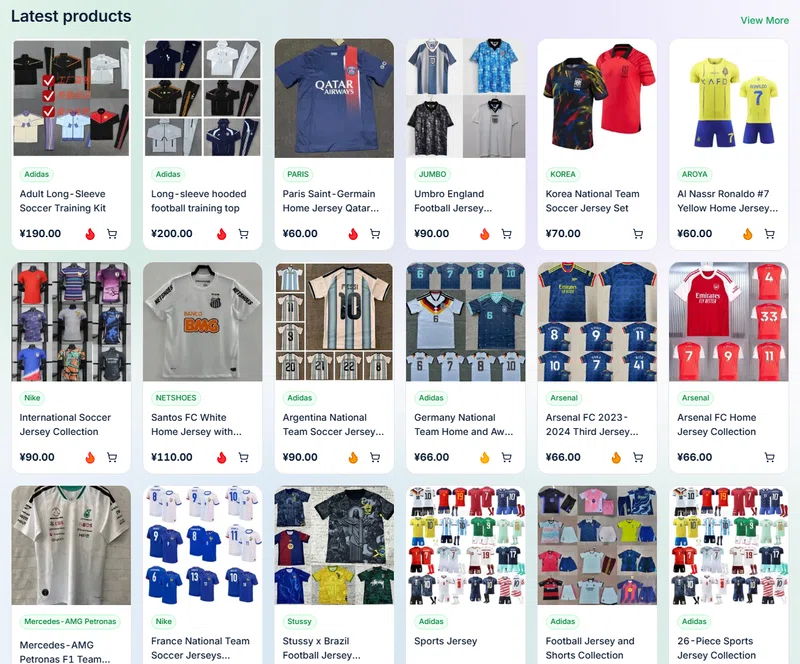
On the platforms behind the catalogue, seller signals are public and readable without an account. Store age and sales volume anchor the baseline; age, sales and review history offer context but do not certify stock or quality. Buyer photos can add a useful angle, yet can also be reused or incentivised. Compare dates, variants and consistency before drawing a conclusion.
On 1688 specifically, listings price by batch and often set minimum order quantities; a single-unit buyer wants the retail platforms instead, and the same product usually exists on both at different prices. When a listing exists in five storefronts at five prices, the lowest price alone cannot identify the original seller or the available stock. Compare the exact variant, quantity tier, evidence and seller terms.
The agent layer adds one more check: platforms the agent crawls automatically, Taobao, Tmall, 1688 and JD.com, produce cleaner orders than manual-form platforms, where after-sales support is explicitly absent.
How to choose a trustworthy agent
Across the industry, agents differ on a few load-bearing axes: fee model, a posted service fee, conversion costs and any other itemised charges; inspection depth, from appearance-only to paid functional checks; storage windows, from a month to a season; route breadth per destination; and the legibility of the company behind the site. There is no ranking here because the honest data for one does not exist; what exists is a checklist you can run on any candidate in an evening.
Run it so: find the fee page and date it. Find the inspection scope and read the exclusions. Find the storage clock and its abandonment clause. Price one realistic parcel on the estimator. Then look for the legal entity on the contact page and check the register it claims. On this agent, that walk yields: no handling fee on service, appearance-only inspection, 100 free days, and two named companies, one of them UK-registered under number 16947583.
A pattern worth respecting: any agent whose public pages make the checklist hard to complete is answering the question by other means.
Listings
How to pick a listing worth ordering
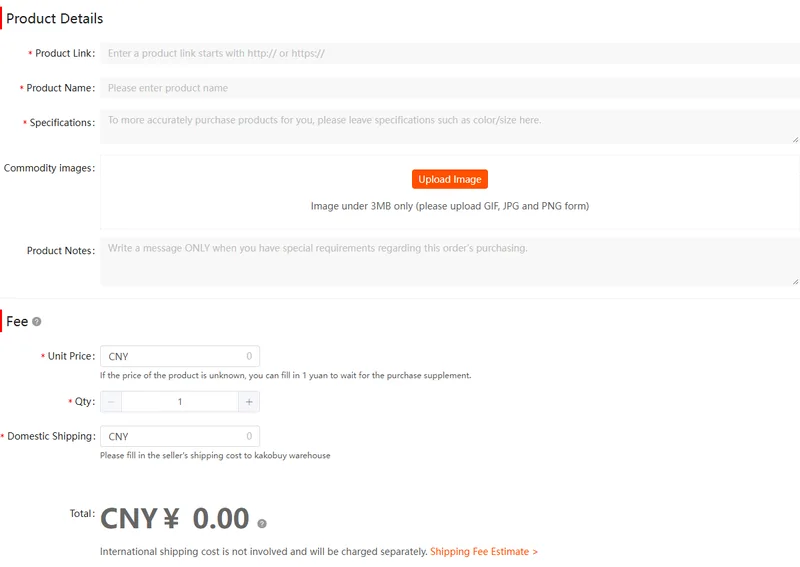
A good listing is specific: variant options named, measurements given, recent buyer photos attached. Feed that specificity forward into the order: the variant goes into remarks in writing, and the listing link you submit should be the exact variant page, not the storefront.
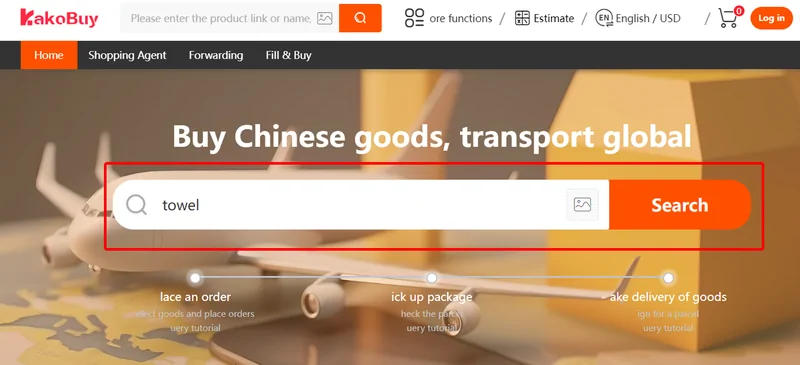
Search works best in the sellers' own vocabulary. The agent's keyword search covers the four crawled platforms, so category terms and brand-adjacent phrasing find what literal product names miss. The official tutorial's example, a towel search, is mundane and exactly right: common nouns, then filter by the photography.
Shopping cautions, the short list
- Manual-form orders are final. Links outside the crawled platforms go through the fill-and-buy form, whose own terms state no after-sales, no cancellation after payment, and no quality guarantee. Price that risk in.
- Forbidden items travel badly. Prohibited and restricted classes, from aerosols to lithium quirks, can strand a parcel at submission or at customs. Read the route notes before buying, not after.
- Customs is your name on the form. Declared values and category duties are destination law; the €3 EU arrangement is the operator's subsidy claim, dated 1 July 2026, not a law of nature. When in doubt, declare honestly.
- Screenshots expire. Fee pages, promo banners and coupon terms all change. Date everything you rely on; this site does, and records the source date so you can compare the current official wording.
The field
Other agents, read with a checklist instead of a podium
The industry around this one agent is large and structurally similar: register, top up, buy, warehouse, consolidate, ship. Differences concentrate in the fee shape, the inspection ceiling, the storage clock and the service window. Some competitors post service fees and settle in multiple wallet currencies; some open every package by default; some publish batch-level QC galleries.
None of that makes a ranking, because service quality is a moving, per-order experience that no public dataset captures honestly. What transfers is the method: the same evening checklist, run on any candidate, answered from its own published pages. An agent that survives your checklist and fits your destination's routes is a good agent for you, whatever a toplist says.